Common Bird Sarawak Eurasian Tree Sparrow


The comparison illustrates the changing fortunes of birds in the last intervening 80 years as Singapores natural environment changes from one which was largely rural to.
Common bird sarawak eurasian tree sparrow. Topmost spot for common birds. Eurasian Tree Sparrow Commonly mistaken as the Maya the former Philippine national bird the Eurasian tree sparrow Passer montanus is quite different in looks. His top three birds were Eurasian Tree-sparrow Oriental Magpie-robin and Yellow-vented Bulbul.
Eurasian Tree Sparrow. Typically found in small flocks often in more natural areas than concrete-loving House Sparrow. The genus includes the.
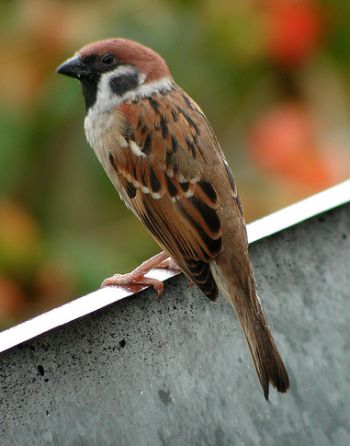
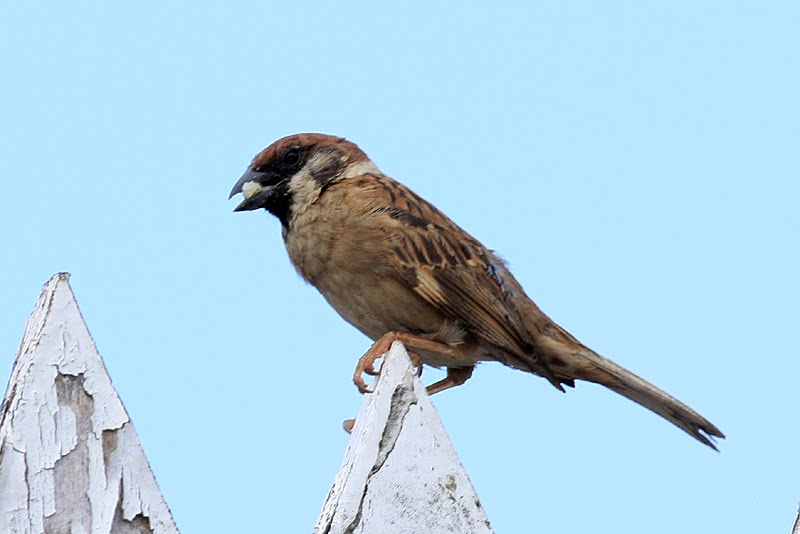
The Eurasian tree sparrow and the house sparrow were brought to America in hopes of controlling insects but both have become pests. Slightly smaller than House Sparrow with entirely rufous cap black and white cheek and limited black in the throat. Males and females are similar.
Then why is it called a tree sparrow. Male in resplendant red and black. Unlike its relative the House Sparrow it is not a bird of cities instead using farms and.
The black spots on the cheeks of young sparrows provide a helpful. Louis area in Missouri and Illinois. The Eurasian Tree Sparrow is a common bird that inhabits a very large range and an estimated population of 190000000-309999999 mature individuals which justifies its status as a least concern species.
These Old World sparrows are more closely related to birds in the Middle East and India than to our native American sparrows. These chestnut-capped white-cheeked arrivals prospered in the hedges and woodlots of the region ultimately spreading through northeastern Missouri west-central Illinois and southeastern Iowa. Eurasian Tree Sparrow Passer montanus is most popular saparrow in Japan.
Today the Eurasian Tree Sparrow is most frequently associated with wooded urban parkland farms and rural woodlots. They are called スズメ suzume in Japanese. Eurasian Tree Sparrow Passer montanus is a very common bird in Borneo co-existing happily with human.
Black bib and distinctive black ear patch. However for the past few decades the European population has been decreasing probably due to changes in agricultural practices. They hop on the ground restlessly.
Female only a bit of red. It has a chestnut brown crown black patched face with white cheeks in contrast to the Chestnut Munia or Maya which has a dark head brown body and white beak. As a small bird the common and often seen Eurasian Tree Sparrow provides a convenient benchmark for comparing the size shape and voice of other small birds.
Brown crown distinguishes it from similar gray-crowned male House Sparrow. Pipit Rumah Chinese Name. EU OR widespread Taxonomy.
The colonial Britisher who named it was obviously familiar with it back home as a common woodland bird. They feed on excess rice and bread crumbs thrown out of the kitchen and often seen bathing in puddles at road side after a shower. Unlike its relative the House Sparrow it is not a bird of cities instead using farms and.
Female male has deeper blacks. These chestnut-capped white-cheeked arrivals prospered in the hedges and woodlots of the region ultimately spreading through northeastern Missouri west-central Illinois and southeastern Iowa. The Eurasian Tree Sparrow Passer montanus we commonly see around is actually adapted to human habitationIt usually nests in any convenient holes in buildings.
Passer montanus Malay Name. Also they cry chun chun. The comparison illustrates the changing fortunes of birds in the last intervening 80 years as Singapores natural environment changes from one which was largely rural to.
15 cm 6 Local. His top three birds were Eurasian Tree-sparrow Oriental Magpie-robin and Yellow-vented Bulbul. Introduced to and now common around St.